10 Common Roofing Problems That Cause Roof Leaks
If your home has damp patches, water staining or unexplained moisture, the problem often starts at the roof. As building surveyors, we diagnose roof defects as one of the common causes of leaks during roof surveys and drone inspections, across London and the South East.
Below are 10 common roofing problems that can lead to water ingress, what causes them, and the warning signs homeowners should look for.
10 Common Roofing Problems
1. Slipped or Missing Roof Tiles
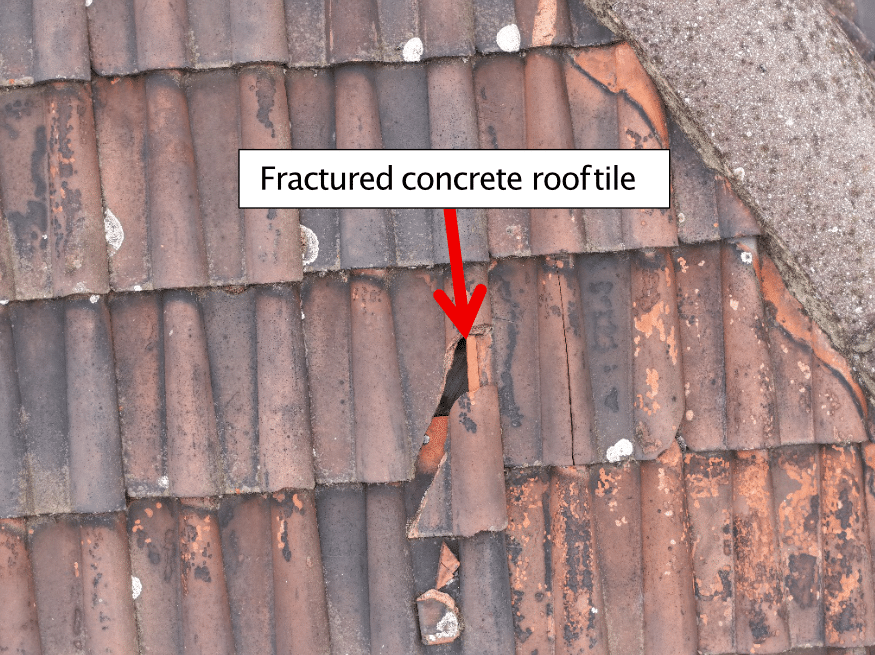
A single slipped or missing roof tile can expose the underfelt beneath it and let wind-driven rain enter the roof void. This is typically caused by nail corrosion, weathering, poor original fixings, or foot traffic on the roof.
Even one displaced tile can produce internal damp patches within days, making this one of the common roofing problems to cause visible damage.
2. Torn or Perished Underfelt
Roofing underfelt sits beneath the tiles as a secondary barrier against water. Older bitumen felt, often past its intended lifespan, becomes brittle and cracks over time, particularly around eaves and valleys, due to age, UV exposure and rodent damage.
When underfelt fails, water can bypass the tiles and enter through gaps, potentially leading to damage within the roof structure and loft space.
3. Defective Lead Flashings
Lead flashings around chimneys, abutments and skylights are among the higher-risk areas on any roof. They can fail due to poor original detailing, cracked mortar pointing, or movement and weathering of the lead over time.
When flashing fails, water can penetrate at the junction and track into loft timbers, sometimes causing water damage well before it becomes visible from inside the property.
4. Blocked Roof Valleys
Roof valleys are the channels where two roof slopes meet, and they carry a large volume of water during rainfall.
When blocked by moss, debris, or a poorly formed valley trough, water can overflow beneath the tiles instead of running down the channel. This defect can cause sudden internal staining during heavy rain, especially in high winds, even on a roof that appeared to be in reasonable condition beforehand.
5. Cracked Ridge or Hip Mortar
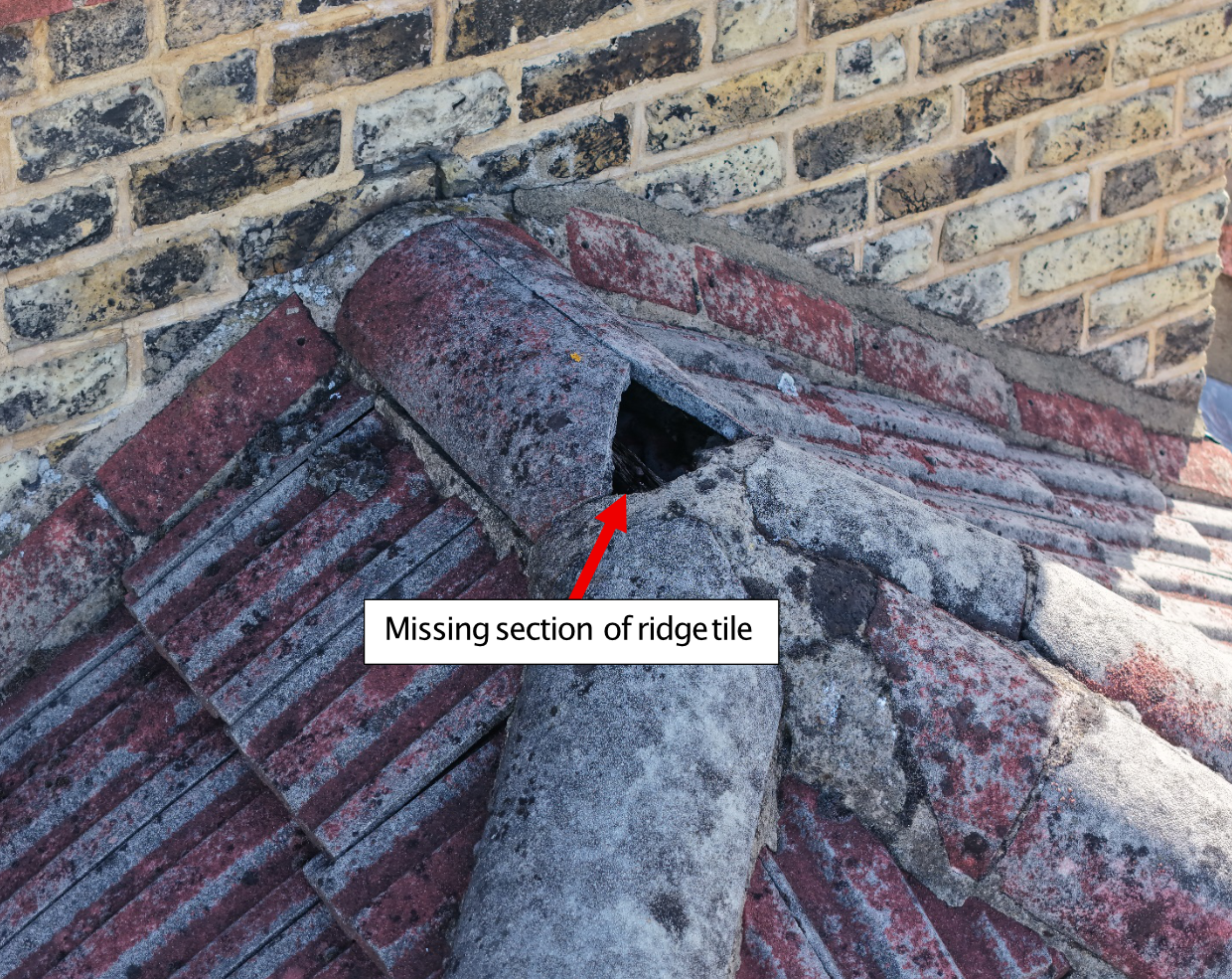
The mortar bedding that holds ridge and hip tiles in place can deteriorate due to weathering over time, particularly on older roofs. Frost damage, general weathering and a lack of mechanical fixings in some older installations can all contribute to deterioration.
As the mortar cracks and gaps open, wind can lift the tiles, creating potential routes for water ingress that may worsen progressively with each storm. [Which]
6. Flat Roof Ponding and Membrane Failure
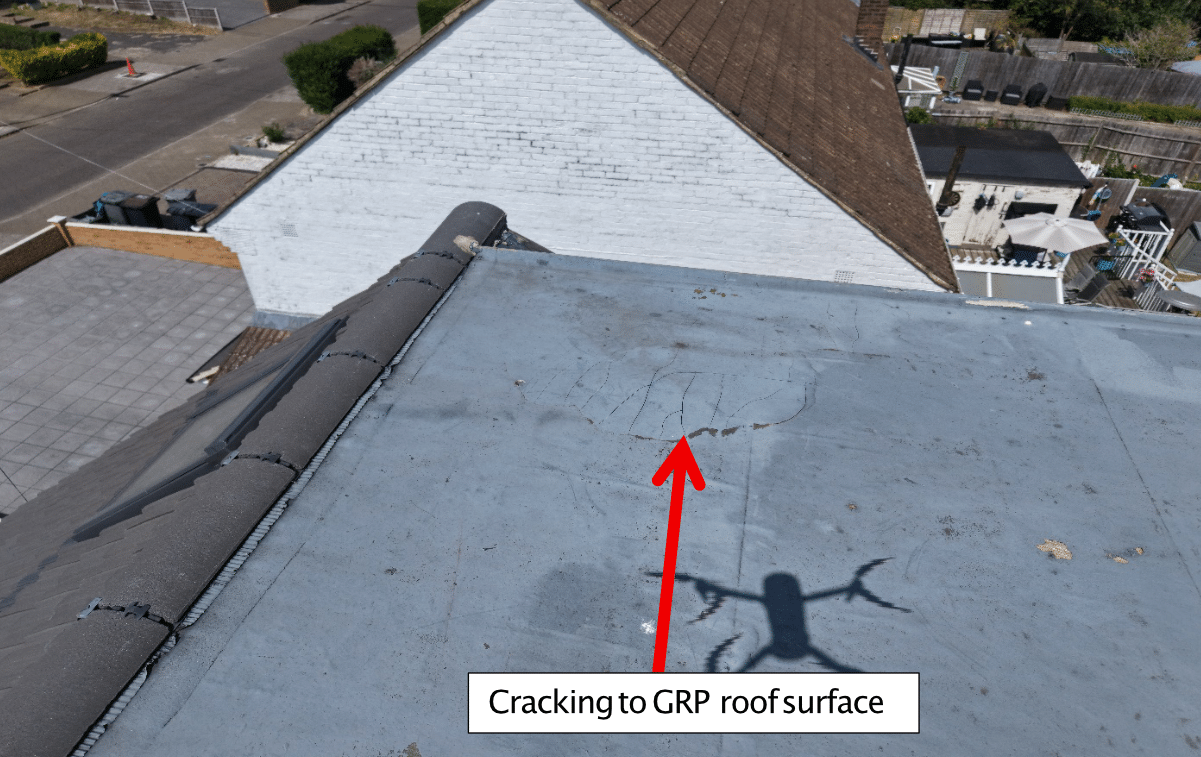
Flat roofs are especially vulnerable to standing water, or ponding, and membrane deterioration. Poor falls, which affect the roof’s drainage, blocked outlets, and aged felt or asphalt can all contribute to this. [approved document F]
Once ponding begins, water can exploit cracks, blisters and failed joints in the membrane, often leading to leaks that are difficult to trace to a single point.
Thermal imaging can also be particularly useful when investigating suspected moisture within flat roof constructions.
7. Defective Gutters and Eaves Detailing
Overflowing or misaligned gutters can allow water to run down the façade of a building, causing penetrating damp. This usually stems from blockages, incorrect gutter alignment or defective rainwater goods and can eventually contribute to damage to the building fabric.
It is vital that gutters and rainwater drainage are properly maintained.
8. Chimney Defects
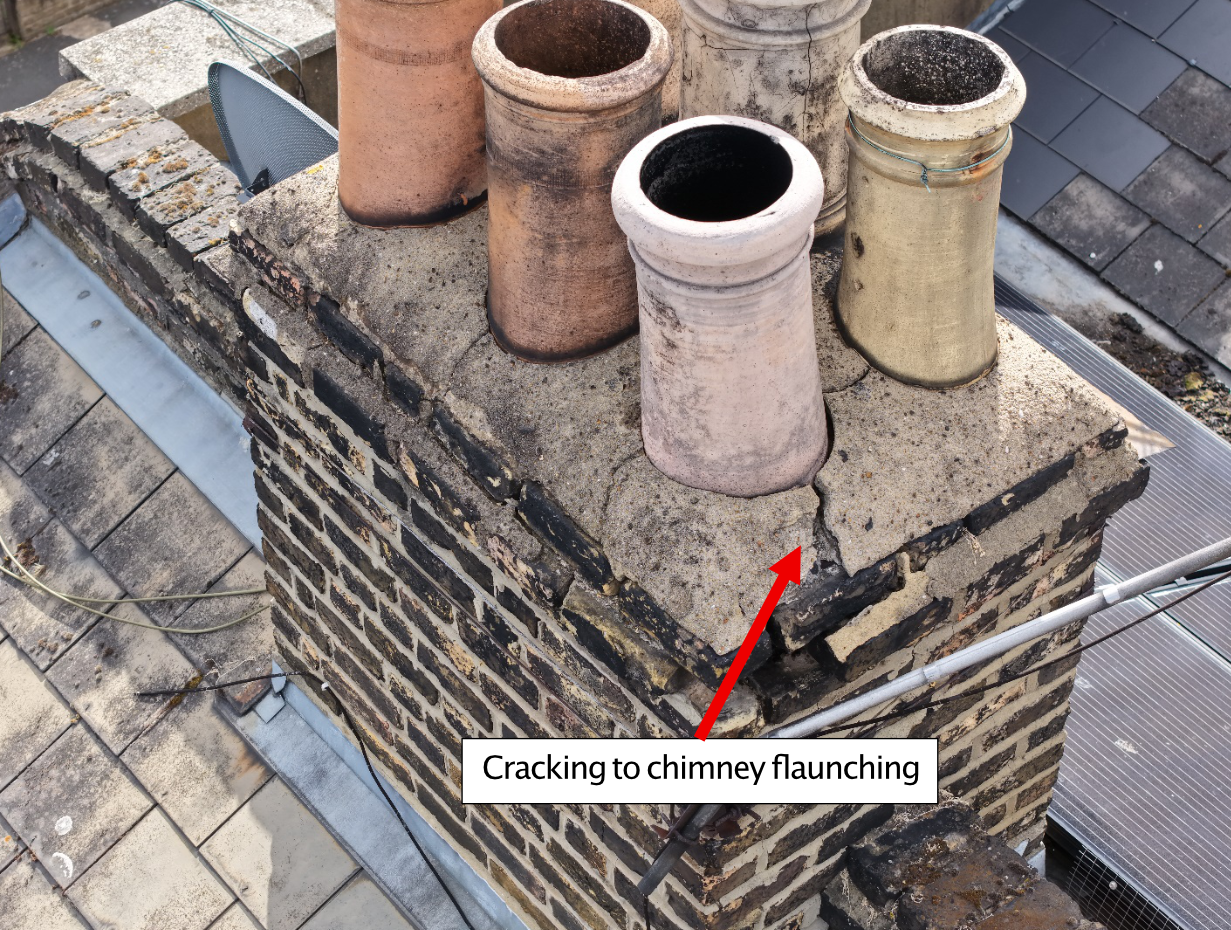
Chimneys are exposed to weather and can deteriorate over time. Common defects include cracked flaunching, open mortar joints, damaged chimney pots and defective flashing around the chimney stack.
Water entering through a compromised chimney stack can run down into the loft space, sometimes travelling a significant distance from the actual point of entry. [Which]
9. Poorly Installed Roof Coverings
Rushed contractor work or DIY repairs can create hidden vulnerabilities that aren’t visible until a leak develops. This includes missing fixings, incorrect tile overlaps and the use of incompatible materials.
These installation defects may only reveal themselves during heavy rain or storms, when the roof is under greater weather exposure.
If the cause of a leak isn’t obvious, a professional roof inspection can help identify defects that may not be readily visible from ground level.
10. Condensation Misdiagnosed as a Leak
Not every apparent “roof leak” is actually water ingress from outside — condensation inside the loft can produce very similar symptoms.
This can be caused by poor ventilation, inadequate insulation, blocked ventilation routes or ineffective bathroom and kitchen extraction.
Condensation typically appears as moisture or drips forming on cold surfaces, which homeowners can sometimes mistake for a genuine roof leak.
Frequently Asked Questions
What is the most common cause of roof leaks in the UK?
Slipped or missing roof tiles are among the common causes, since even one displaced tile can expose the underfelt and allow rain into the roof void.
Which? recommends paying particular attention to cracked or slipped tiles, missing tiles and other visible warning signs, particularly following periods of severe weather. A drone roof survey is an excellent way to determine the condition of your roof. Airtek Surveys can provide detailed roof condition report by RICS approved surveyors.
How can I tell if I have a roof leak or just condensation?
Condensation typically appears as moisture or drips on cold surfaces in the loft and is associated with inadequate ventilation, while a genuine leak tends to track from a specific point such as a flashing, valley or damaged tile.
Condensation and damp can have several different causes, so correctly identifying the source is important.
A professional inspection with thermal imaging can provide additional information where the source of moisture is difficult to establish visually.
Which parts of a roof are most prone to leaking?
Junctions and transitions are often higher-risk areas — including lead flashings around chimneys and dormers, roof valleys and chimney stacks — because these are points where materials meet or where rainwater is concentrated.
Which? specifically recommends paying attention to roof ridges, valleys and chimneys when checking for potential roofing problems.
Can a roof leak get worse gradually without obvious signs?
Yes. Defects such as cracked ridge mortar or minor flashing failures can start small and worsen over time, potentially causing damage within the loft or roof structure before staining becomes obvious on ceilings.
For this reason, visible staining should not necessarily be treated as the location of the actual roof defect. Water can travel through building materials before becoming visible internally.
How does a professional roof survey identify the cause of a leak?
A thorough roof survey can combine external inspection, drone inspection where appropriate, high-resolution photography, thermal imaging and a detailed loft inspection.
RICS guidance confirms that residential surveys can include inspection of accessible roof spaces and that appropriate methods and equipment may be used where parts of a roof cannot readily be seen. RICS level 2
This approach can help identify the actual cause of a roof problem rather than simply treating the visible symptom.
How Airtek Surveys Identifies Roof Defects
Our inspections combine:
• Drone roof surveys for inaccessible or unsafe roofs
• High-resolution photography of tiles, flashings and valleys
• Thermal imaging to investigate hidden moisture patterns
• Detailed loft inspections
• Construction technology-based diagnosis, not guesswork
This approach allows us to investigate the cause of a roof leak rather than simply treating the visible symptoms.
Where appropriate, our survey findings can be supported by detailed photographic evidence to help property owners understand the condition of the roof and make informed decisions about further investigation or repair.
Book a Professional Roof Survey by AssocRICS Building Surveyor
If you’re dealing with damp patches, staining or a suspected roof leak, a professional roof survey can help identify defects before they develop into more significant problems.
Airtek Surveys provides detailed roof inspections across London, Surrey, Kent, the South East and the wider UK.
Contact Airtek Surveys to discuss your roof inspection requirements.